
Mysis Shrimp Research Project
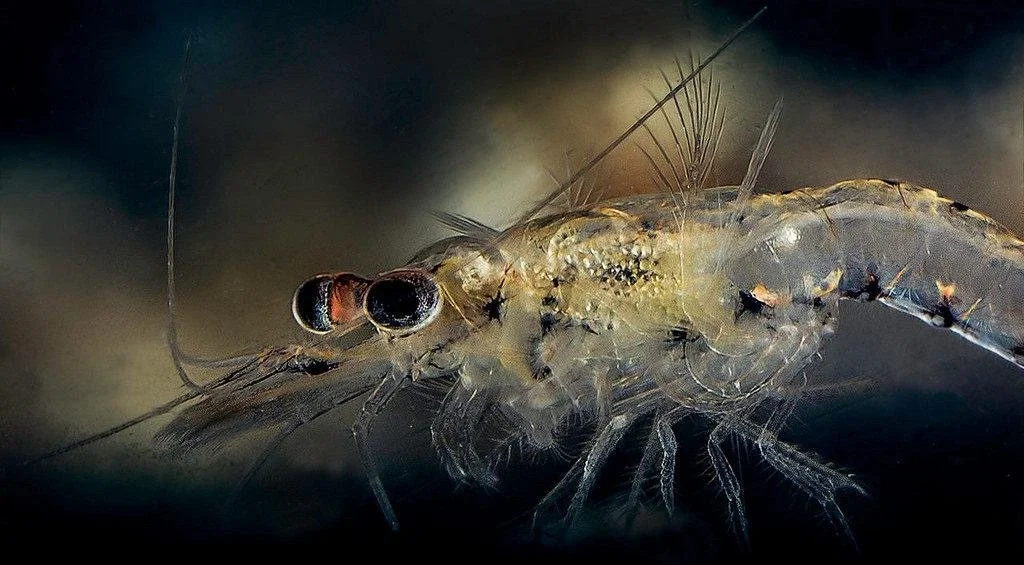
Colorado State University in Partnership with Three Lakes Watershed Association and in collaboration with the Bureau of Reclamation, Colorado Parks and Wildlife and Northern Water, are completing a detailed study to determine the impact that the invasive species “Mysis Shrimp” have on the health, clarity and food web of Grand Lake.
The project is managed by Three Lakes Watershed Association (TLWA) in partnership with scientists from Colorado State University Department of Fish, Wildlife and Conservation Biology (CSU), Colorado Parks and Wildlife (CPW), and Northern Water to develop and conduct a study on an invasive species: the opossum shrimp (Mysis diluviana, or simply “Mysis”) found in Grand Lake. The Mysis study will be aimed at improving water quality and clarity and the goal of the study will be to gather detailed data on the impact the Mysis is having on Grand Lake Clarity and how water quality and the fishery can be improved by eradicating the Mysis. The study will also attempt to confirm a link between Mysis and their negative impacts on lake clarity. Daphnia and Bosmina are very efficient grazers, consuming fine particles and algae from the water column, turning them into fecal pellets, which sink to the bottom of the lake. The lack of predation pressure from Mysis during the study period should determine the probability for Daphnia to return in large numbers and consume enough fine particles and algae to hopefully double water clarity in Grand Lake.
The study will include four elements: 1) Characterizations (observations, definitions, and measurements of the subject of inquiry); 2) Hypotheses (theoretical, hypothetical explanations of observations and measurements of the subject); 3) Predictions (inductive and deductive reasoning from the hypothesis or theory); and 4) Experiments (tests of all of the above) and collecting data. Other alternatives to improving Grand Lake Clarity over the past 15 years has yielded only modest success, and these studies have not yet identified any financially feasible structural alternatives to address the true issue. This study is considered a very promising non-structural approach to enhancing water quality by eliminating the invasive species, Mysis in Grand Lake, thus bringing back a large healthy Daphnia and Bosmina population.
Geographically, the invasive species Mysis were introduced into Grand Lake and many other lakes and reservoirs in the region, between the late 1960s and early 1970s as a potential supplemental food source for Lake Trout. However, by the 1980s, it became evident that their introduction in many lakes had produced mixed results. In some cases, Mysis had unintended consequences and has caused negative effects on fisheries and water quality —problems further complicated by the extreme difficulty of eradicating them once established. Local ecologists now believe that Mysis may contribute to reduced water clarity in Grand Lake through their effects on the aquatic food web.
The main issues are that Mysis prey on Zooplankton, and prefer Daphnia and Bosmina, small freshwater planktonic crustaceans that are highly efficient filter feeders. These organisms help maintain water clarity by consuming algae, bacteria, and other suspended particles. By reducing populations of these beneficial zooplankton, Mysis may indirectly contribute to algal blooms and declining water clarity. Additionally, they may also impact nutrient cycling and sedimentation in the water column. These shrimp-like crustaceans Mysis are sensitive to light and given Grand Lake’s semi-clear waters, they chose to spend their days on the dark lake bottom. The game fish in Grand Lake (Lake, Brown, and Rainbow Trout) are sight feeders thus making Mysis mostly unavailable for consumption during the day. However, during the night when the game fish are non-feeding, the Mysis undertake a vertical migration of up to 70m from the depths of Grand Lake to find food. Mysis migrate vertically in large numbers each day (mainly at night), consuming nutrients from the lake bottom and redistributing them at higher levels in the water column. This process may fuel algal production and accelerate nutrient cycling—factors that negatively affect clarity. While juvenile Mysis mainly subsist on algae and detritus, adults are ferocious consumers of zooplankton. Additionally, climate change and associated warmer temperatures may further exacerbate these issues.
The Colorado-Big Thompson (C-BT) Project collects water from the Headwaters of the Colorado River in the Rocky Mountains and delivers it to water users along Colorado's Front Range and Eastern Plains. All of the CBT water collected on the west slope flows through Grand Lake via the Adams Tunnel. As water moves through the C-BT Project’sThree Lakes System, including Lake Granby, Shadow Mountain Reservoir, and Grand Lake, it carries sediment, natural and inorganic materials, and runoff components. These materials can impact water quality and clarity, either directly, or indirectly by fueling algal blooms. Of particular concern is the potential reduction in water clarity in Grand Lake, where clear water is vital to residents and visitors alike. Decreased water clarity due to sediment and algal blooms can negatively affect recreational opportunities, tourism revenue, and property values.
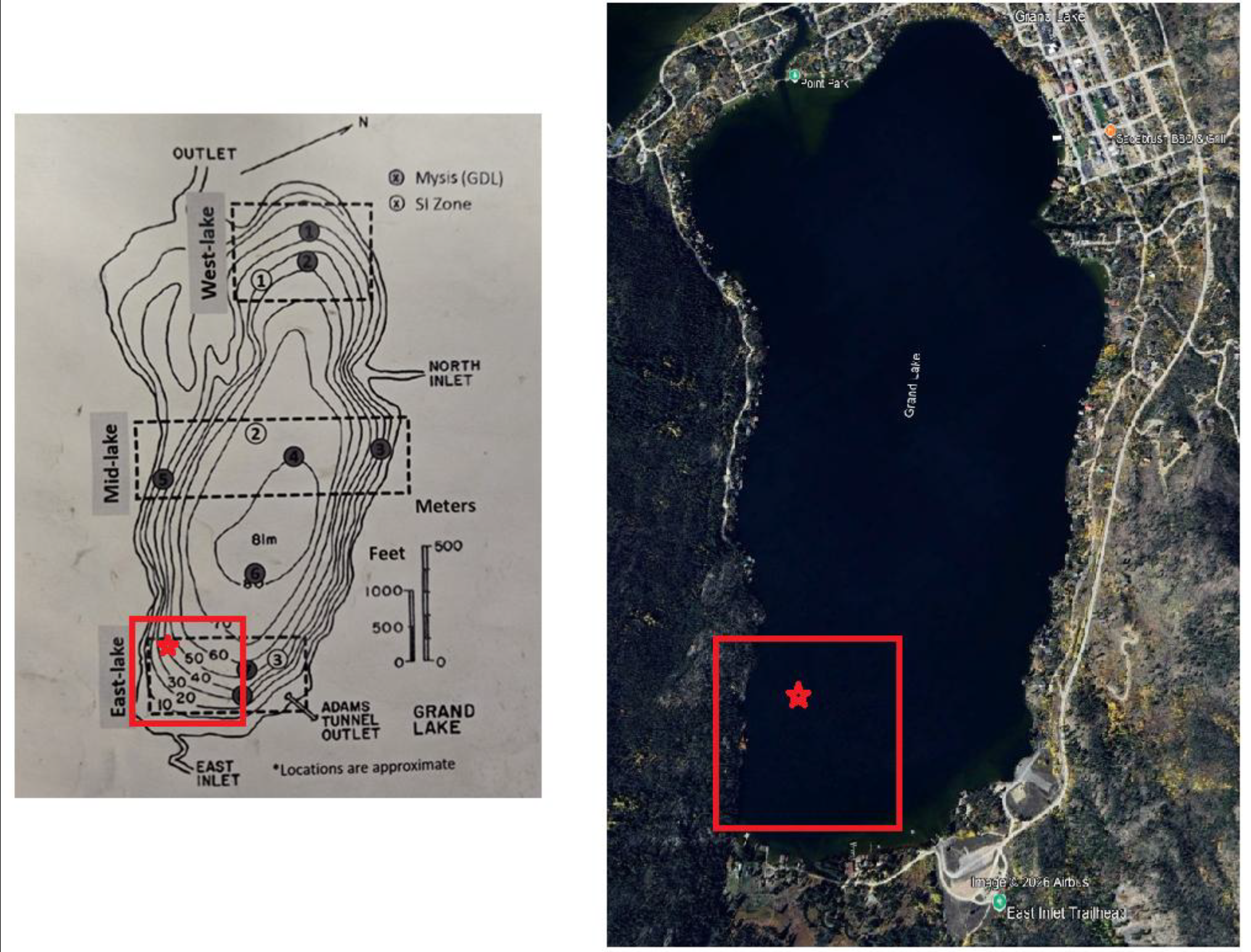
The study will have no impact on Grand Lake. CSU scientists working closely with CPW will setup small platforms in 2-4 locations that will locate, quantify and study the Mysis. The platforms will also have the ability to manually harvest a target number of Mysis mainly on the west end of Grand Lake. CSU’s will build a harvesting trap at each platform and specialty instrumentation and equipment for the project. Researchers and graduate students will be using a Biosonics split beam echo-sounder to determine, in real-time, where Mysis are feeding in the water column to determine where the platforms will be installed. Once researchers have homed in on the depth with the highest density of Mysis, a custom trap will be deployed that lower and raises throughout the night to capture and study the Mysis. All of this work must be done at night when the Mysis come up from the lake bottom to feed resulting in some long and chilly nights for the CSU/CPW field team. The platforms will be marked clearly so recreational boaters do not have any unnecessary accidents.
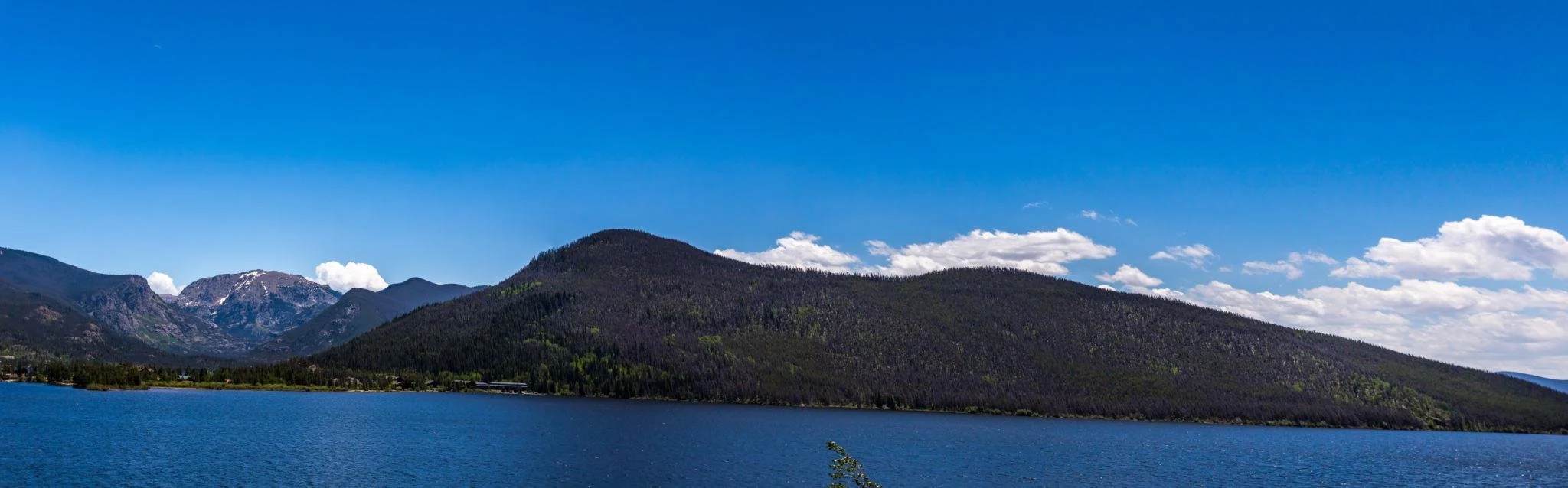
What Are Mysis Shrimp Doing to Grand Lake?
A scientific study is uncovering how this invasive species may be reducing water clarity—and how restoring balance could bring it back.
The Problem, Simply Explained
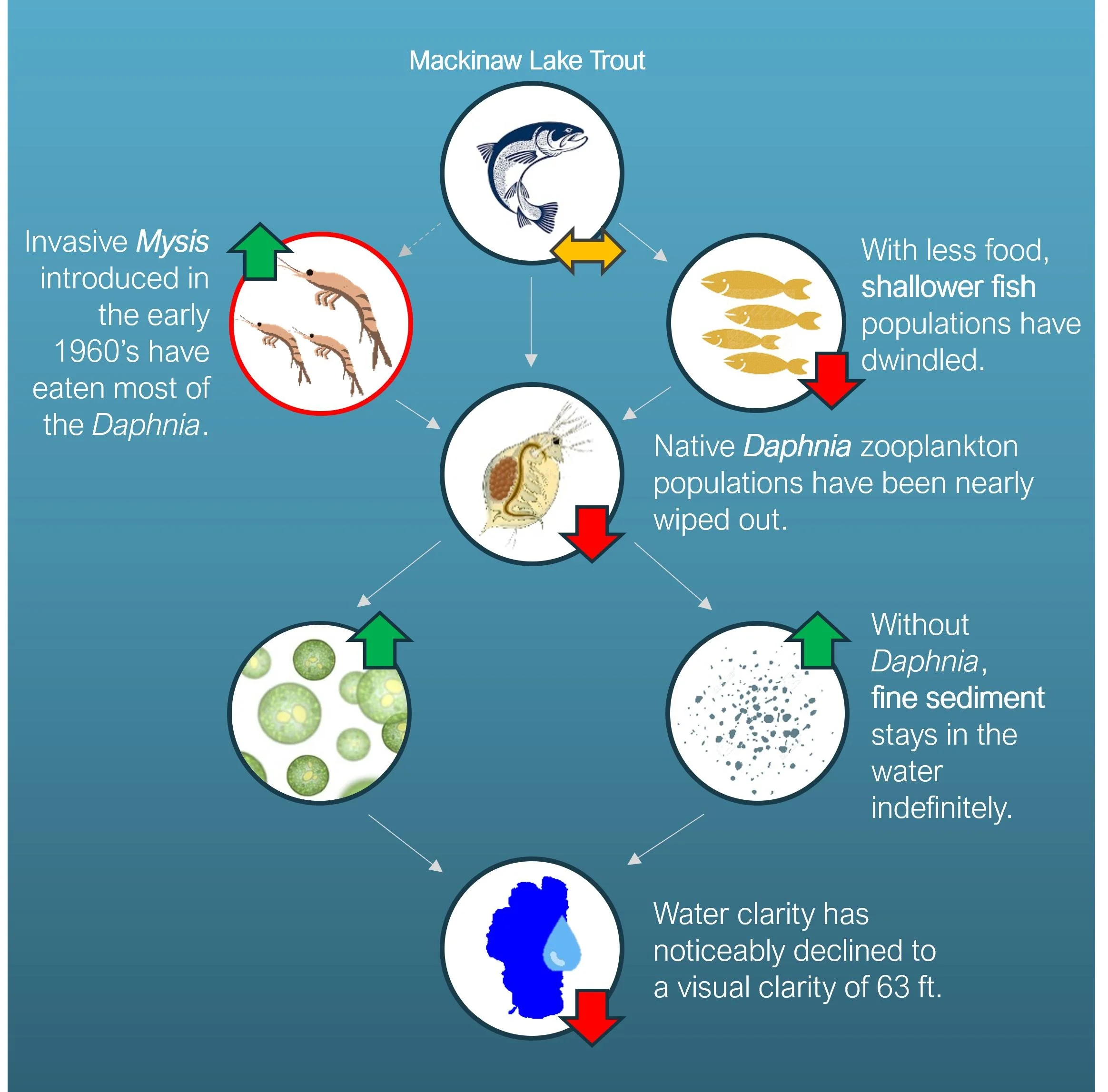
Mysis shrimp consume tiny organisms like Daphnia that naturally clean the water. Without these filter feeders, algae and particles build up—reducing water clarity.
Mysis → eat Daphnia → algae increases → water gets cloudy
Why it matters

Less clarity impacts recreation and tourism

Algae growth affects ecosystem health
Water quality impacts the entire watershed

Grand Lake has already lost significant clarity over time
What you’ll see on the lake
Researchers may install small floating platforms to study and safely collect Mysis at night. These platforms are clearly marked and will not impact recreational use of the lake.
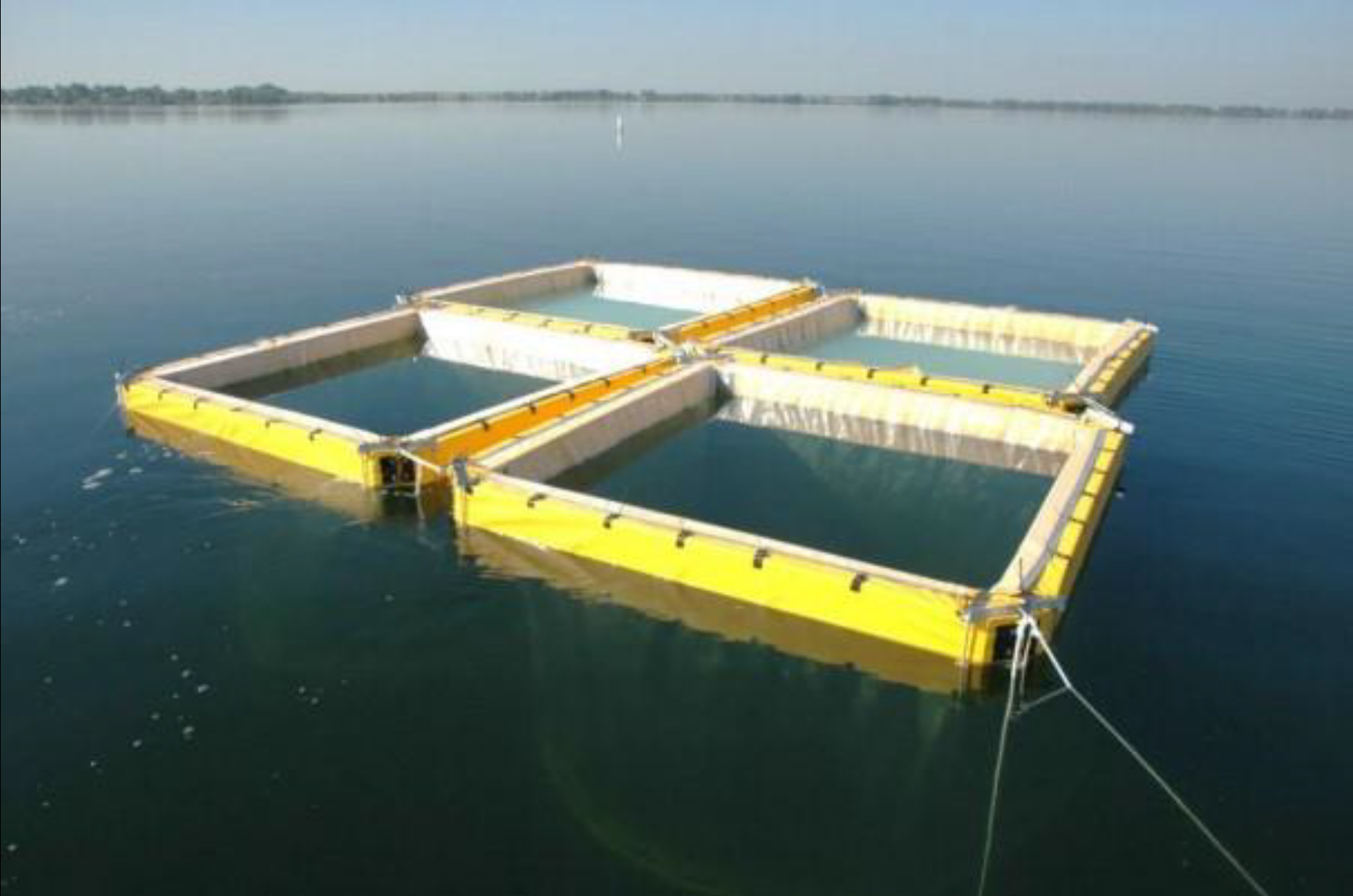
Current plan for deployment location
What Researchers Are Studying
Measure
Tracking Mysis population, movement, and density
Understand
Studying how Mysis impact the food web and water clarity
Test
Running controlled experiments to observe ecosystem response
Plan
Developing long-term management strategies
Project Partners

If Mysis populations can be reduced, natural filter feeders like Daphnia may return—helping restore balance and improve water clarity in Grand Lake.